

Piero Schettini, Bari Vecchia’s Master cobbler
In his new atelier, Piero Schettini reinvents footwear design by offering a sustainable tradition that transcends fashion trends.
There is a memory that returns like a soul struck a thousand times on the same workbench. It’s the echo of Piero Schettini’s grandparents, who after a period in Australia, chose to come back to Bari. They returned and reopened the workshop they had left behind on Via Quintino Sella: a shoemaking lab that, in the silence of summer days and school breaks, began to speak to Piero too. That was the time of unconscious apprenticeship—watchful eyes, promised allowances, and a father determined to pass down not only a craft but a gesture of resistance.
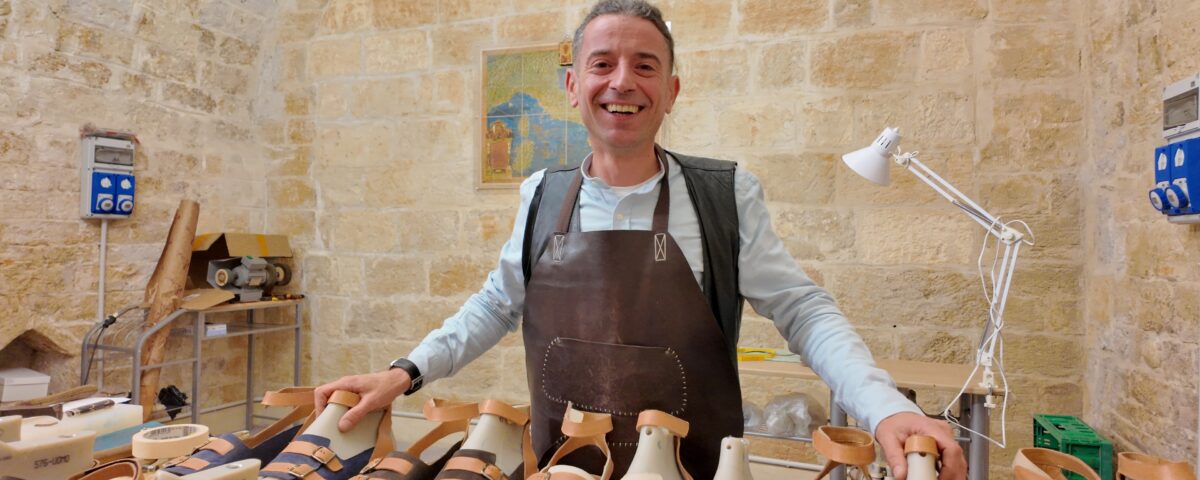
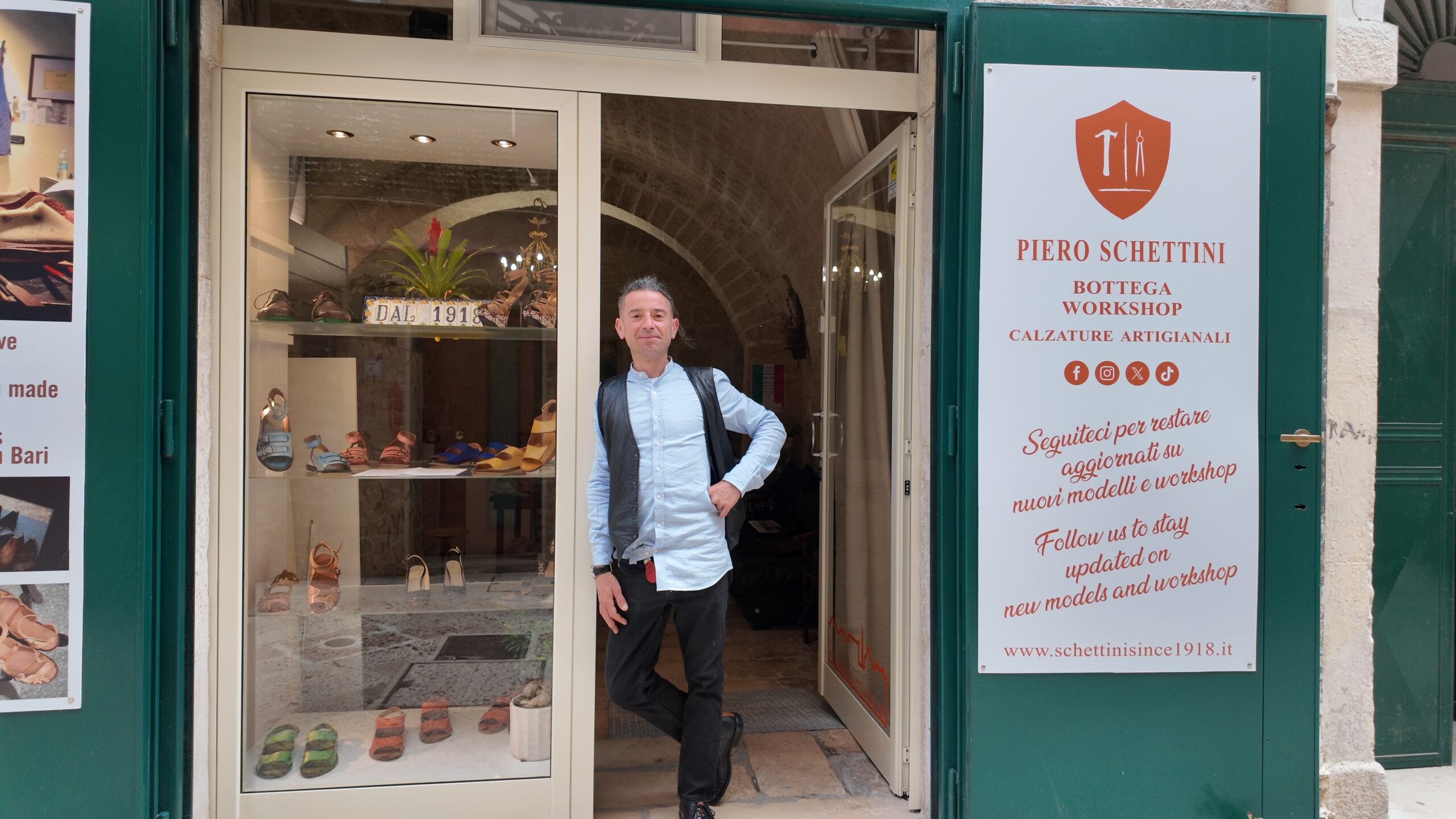
Today, Piero Schettini is a Maestro ciabattino, a master cobbler and artisan designer who has chosen not to compromise with the logic of mass consumption. In his atelier on Strada Filioli 31 in Bari Vecchia, his shoes are stories meant to be worn.
How did you start this craft, and what did it mean to inherit your family’s legacy?
“My father passed the trade down to me, but I first saw it done by my grandfather. I used to spend my afternoons with him in the workshop. It was a way to be together, but also to learn. Then my father began giving us real lessons in shoemaking: he invited us to the garage, promising us a little allowance. After my grandfather died, my father continued teaching us. That’s when I realized he truly wanted to pass on the torch.”
When did you decide this would be your path?
“After I graduated, I joined the military, and that’s when I realized that craftsmanship could offer me everything I hadn’t found elsewhere. I felt there was something beautiful in working with my hands. I’ve always had an entrepreneurial mindset, thanks in part to the work experiences I had alongside business owners. They were as important as the examples within my family”.
In your opinion, what was the golden era of shoe design?
“From a technical and stylistic point of view, I think the highest expression of footwear design was achieved between 2012 and 2015. After that, I realized I had to return to the essence of handmade work, to noble materials, and to techniques that make a product last over time.”
How does your philosophy stand in contrast to fast fashion?
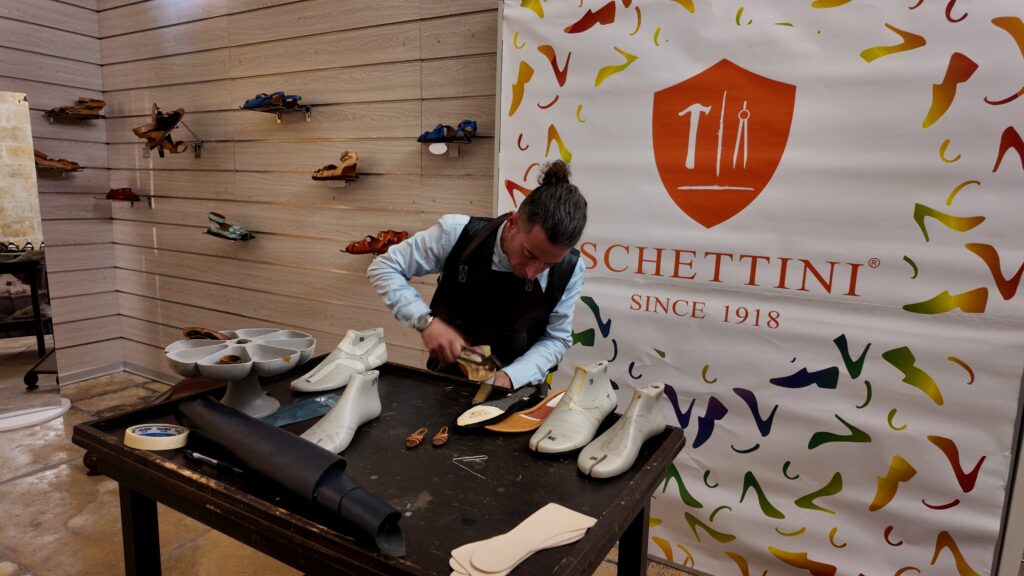
“I believe artisans should focus on quality, not quantity. An industrial shoe is assembled in 20 minutes—mine can take up to eight hours. But it lasts. And if it lasts, it’s sustainable. Not just environmentally, but economically too. Durability is a form of resistance.”
What materials do you use to combine sustainability and durability?
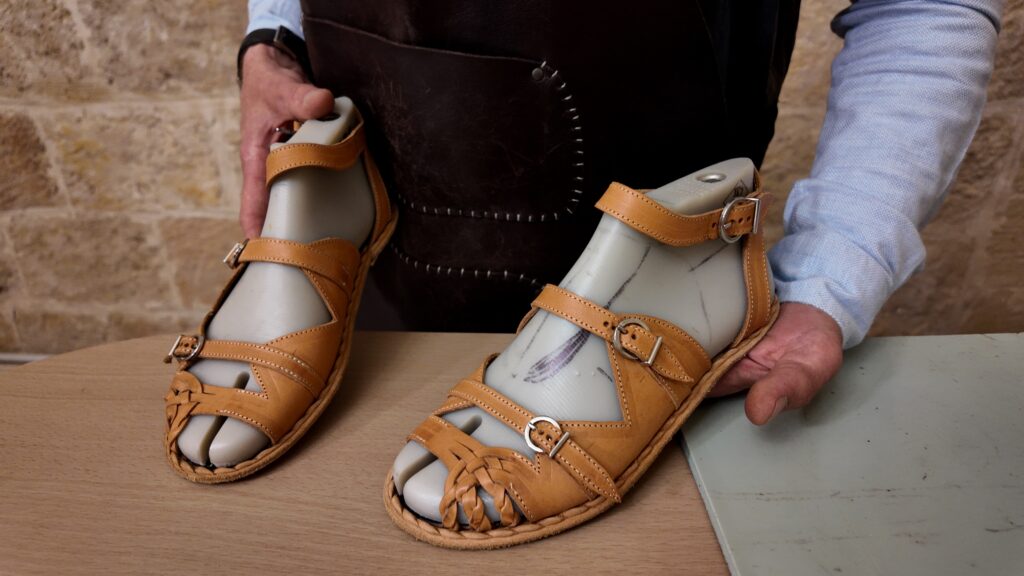
“I work with vegetable-tanned leather, which comes from food industry scraps. So it’s already a recycled material. Handcrafted work requires noble materials, like genuine leather. A well-made shoe can last decades, especially if it’s designed to be repaired and modified over time.”
Can you tell us about your collection Assioma?
“It’s named ‘Assioma’ because to me it represents a certainty: my shoes will fit comfortably and retain their value over time. It’s a sandal collection with two unisex models, whose design ensures a perfect fit. Each model is born from a relationship: Herz, Lolita, Natasha, Alfredo, and Alexander. They’re all named after people who believed in my work and inspired me to create something unique for them. The Ancient Heart model, for example, inspired by the shape of a lotus flower, takes its name from the debut album of a singer-songwriter I’m very fond of, Tanita Tikaram.”
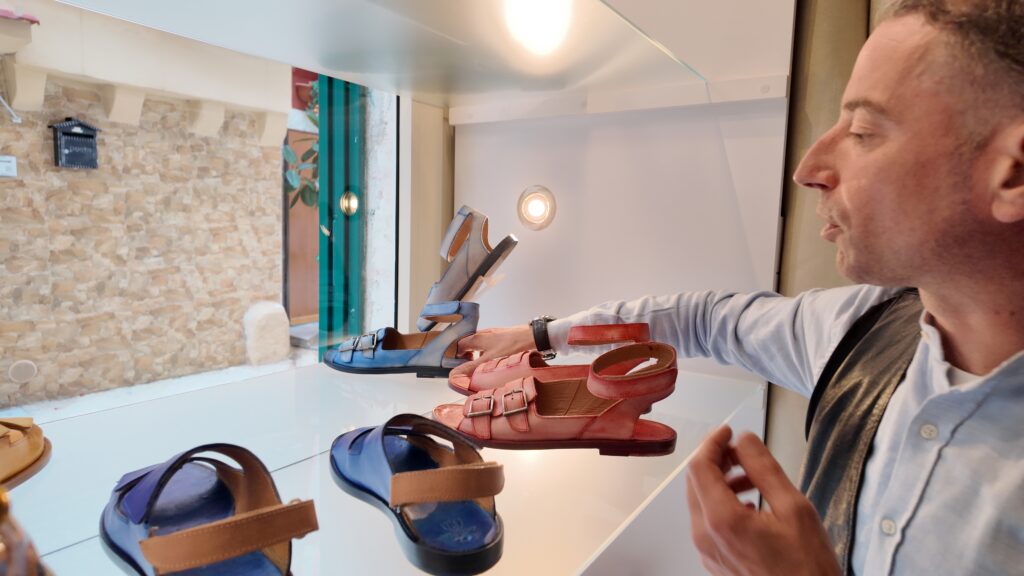
Today, Piero’s shoes atelier is not just a studio—it’s a quiet sanctuary of conscious beauty. In an era where everything moves fast, is consumed and discarded, here, work is done slowly, with care and respect. The shoes crafted by his hands tell stories of resistance, of care, of memory. They don’t chase fashion trends—they walk through them and beyond. They are life projects that travel far, one step at a time.
And while shop windows change with every season, Piero patiently keeps stitching his vision: a well-made shoe is a promise kept.